
This morning I ran an invited workshop, with Dr Iain McDonald of Cumbria University, at the Assessment in Higher Education Conference 2025 in Manchester. One of my favourite conferences, just by the way! The session focused on assessment change at scale. We set the scene by sharing some of the work we have each been involved with, discussing change management approaches and the reality of the context we are working in.
We then set three questions, and each group worked through the process of being a change leader, making choices and exploring the approaches that could be used. I committed to summarising responses, so here is some feedback from the session, by question.
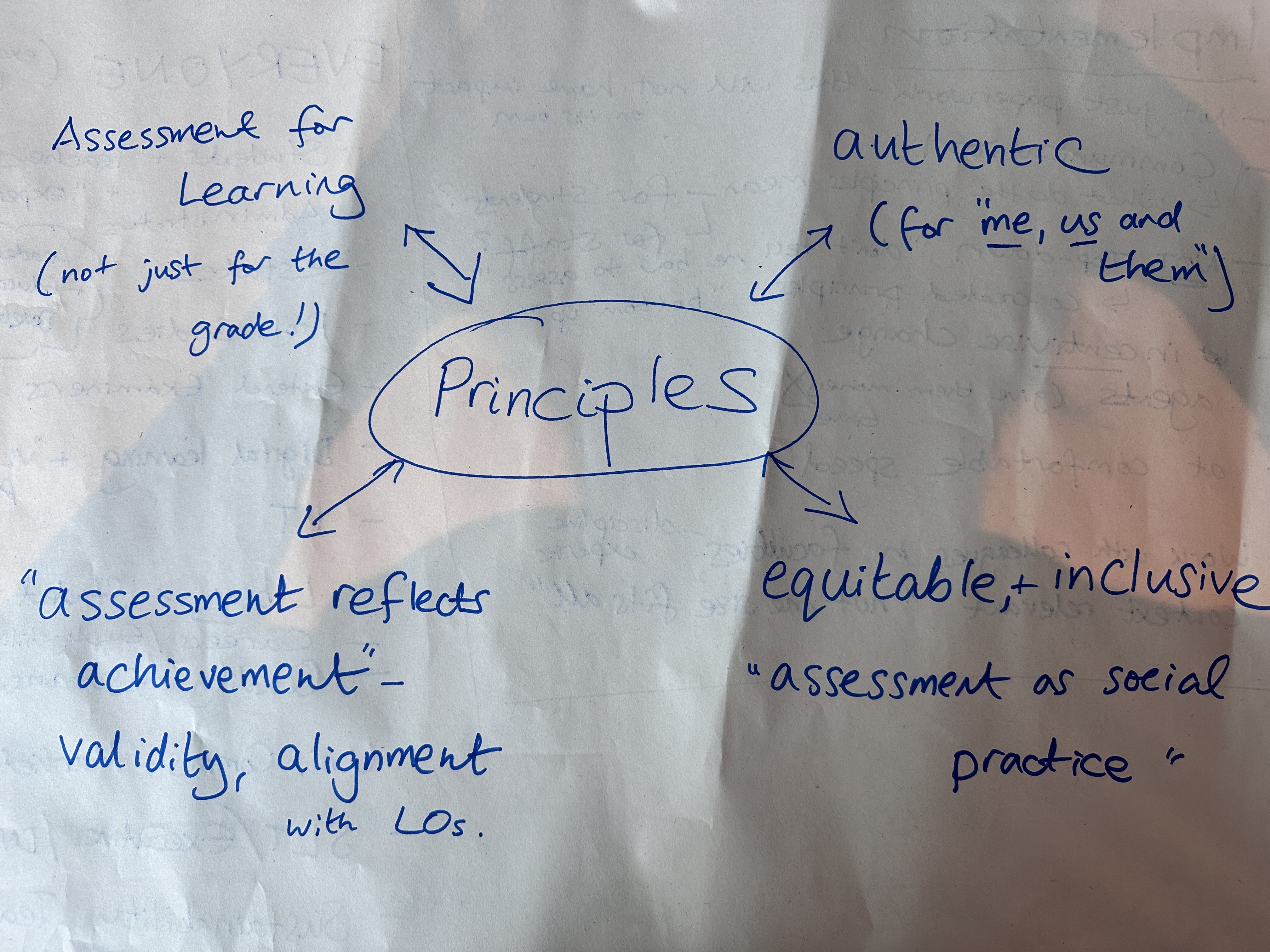
What assessment principles would you prioritise when enacting a change programme? [and why?]
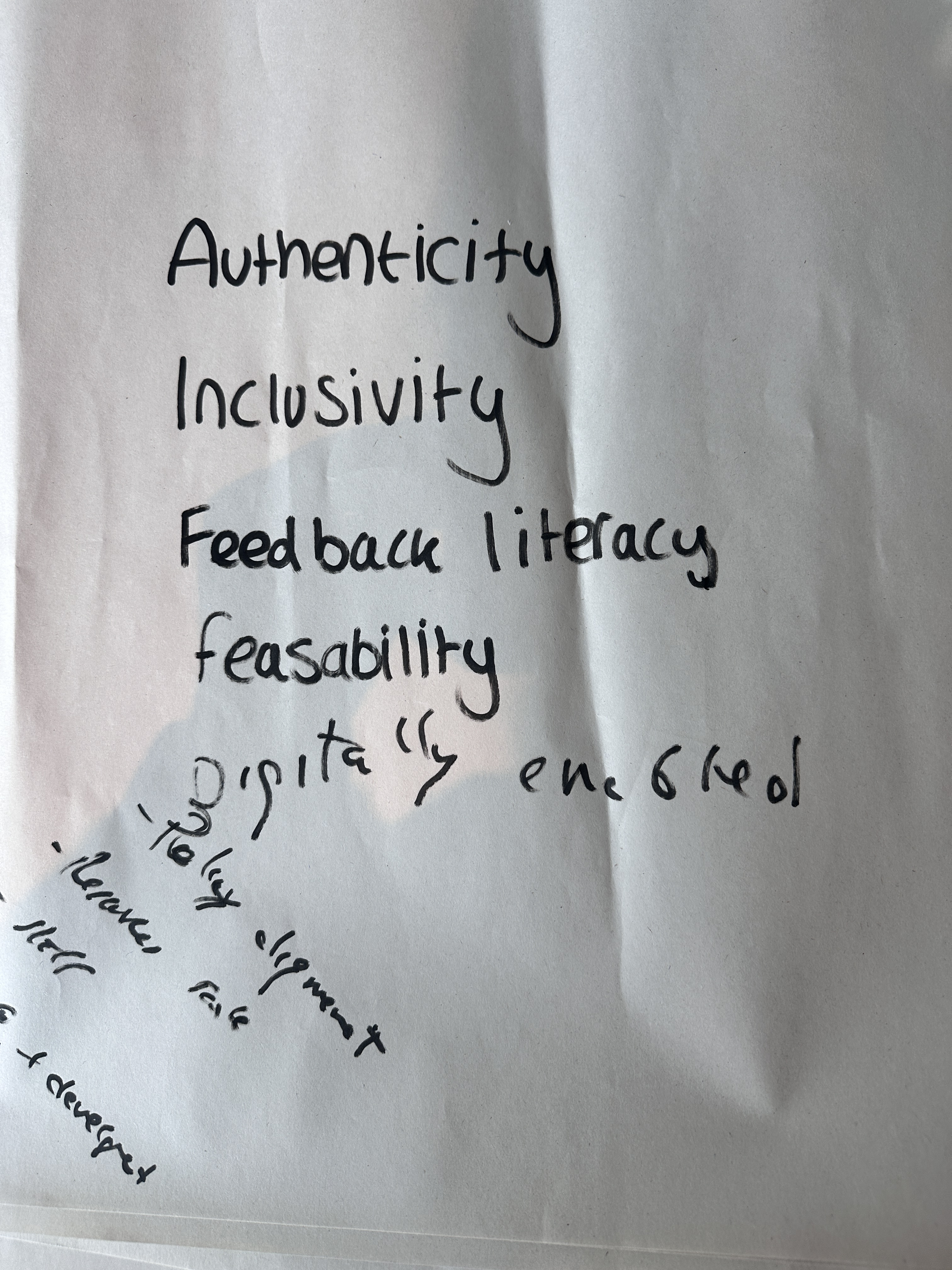
In all honesty, answering this question seemed easier than I thought it would be—I sensed that the top three in the room were:
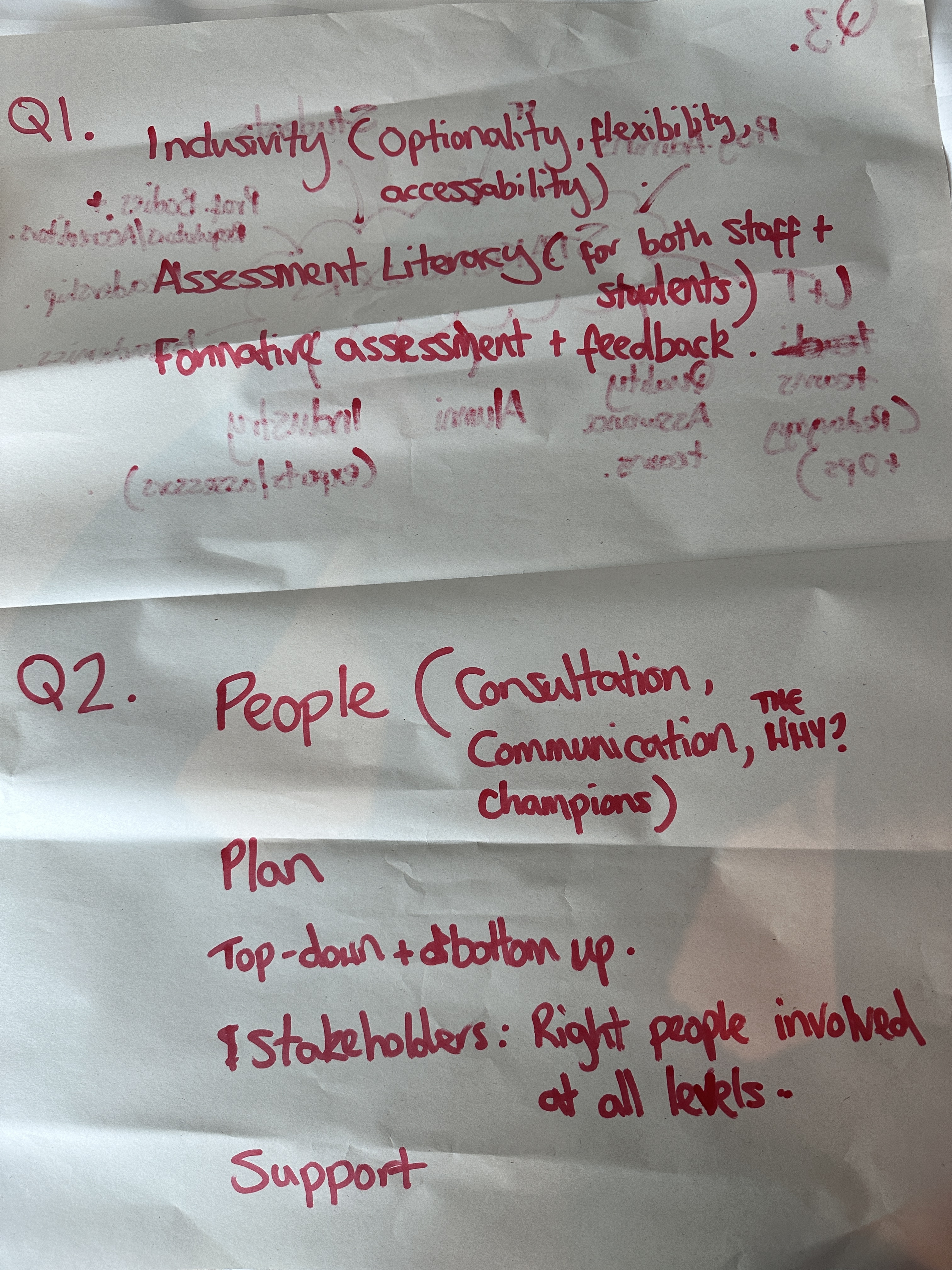
- authenticity (though we recognised the problems of definition)
- inclusivity
- validity
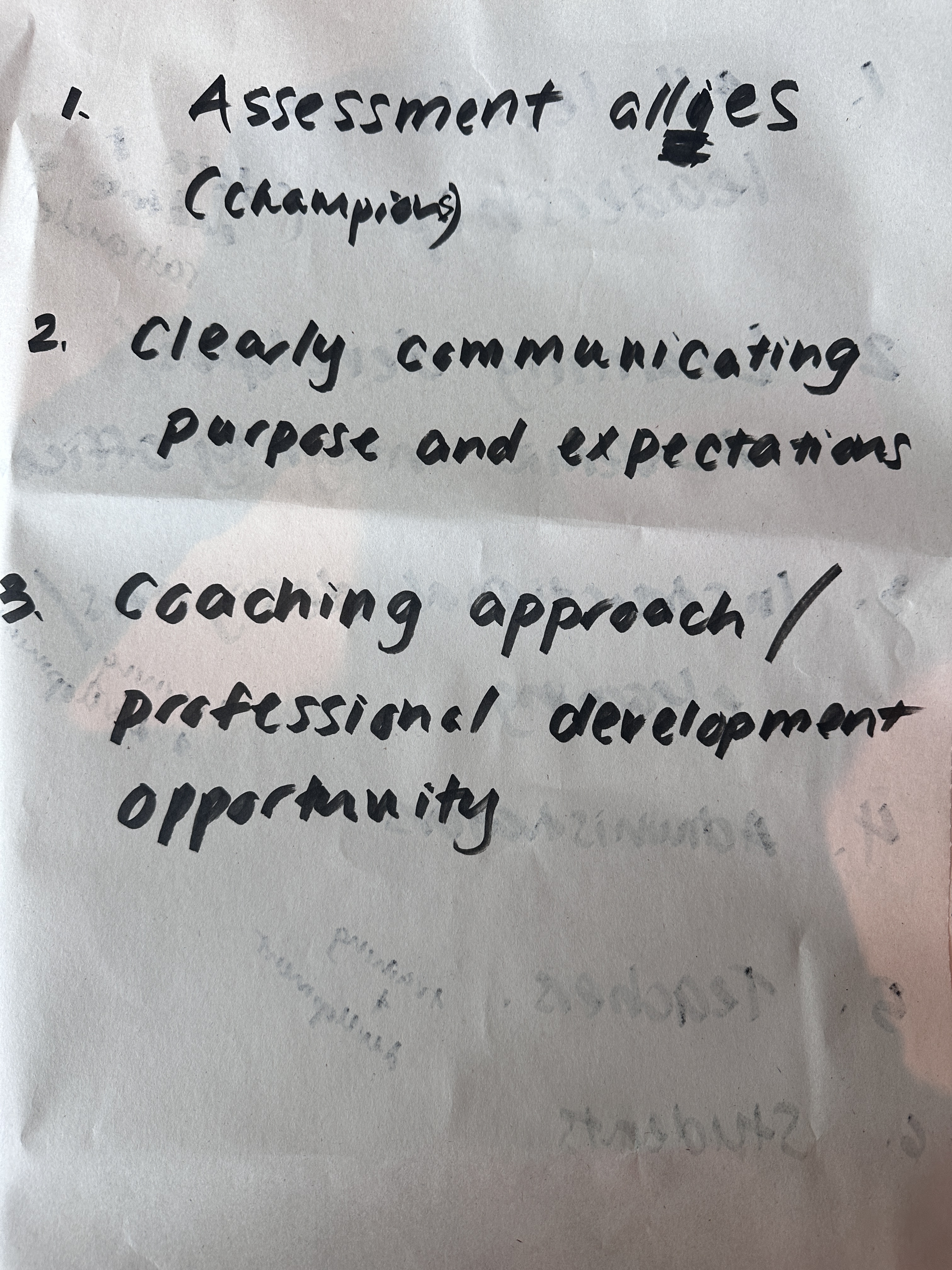
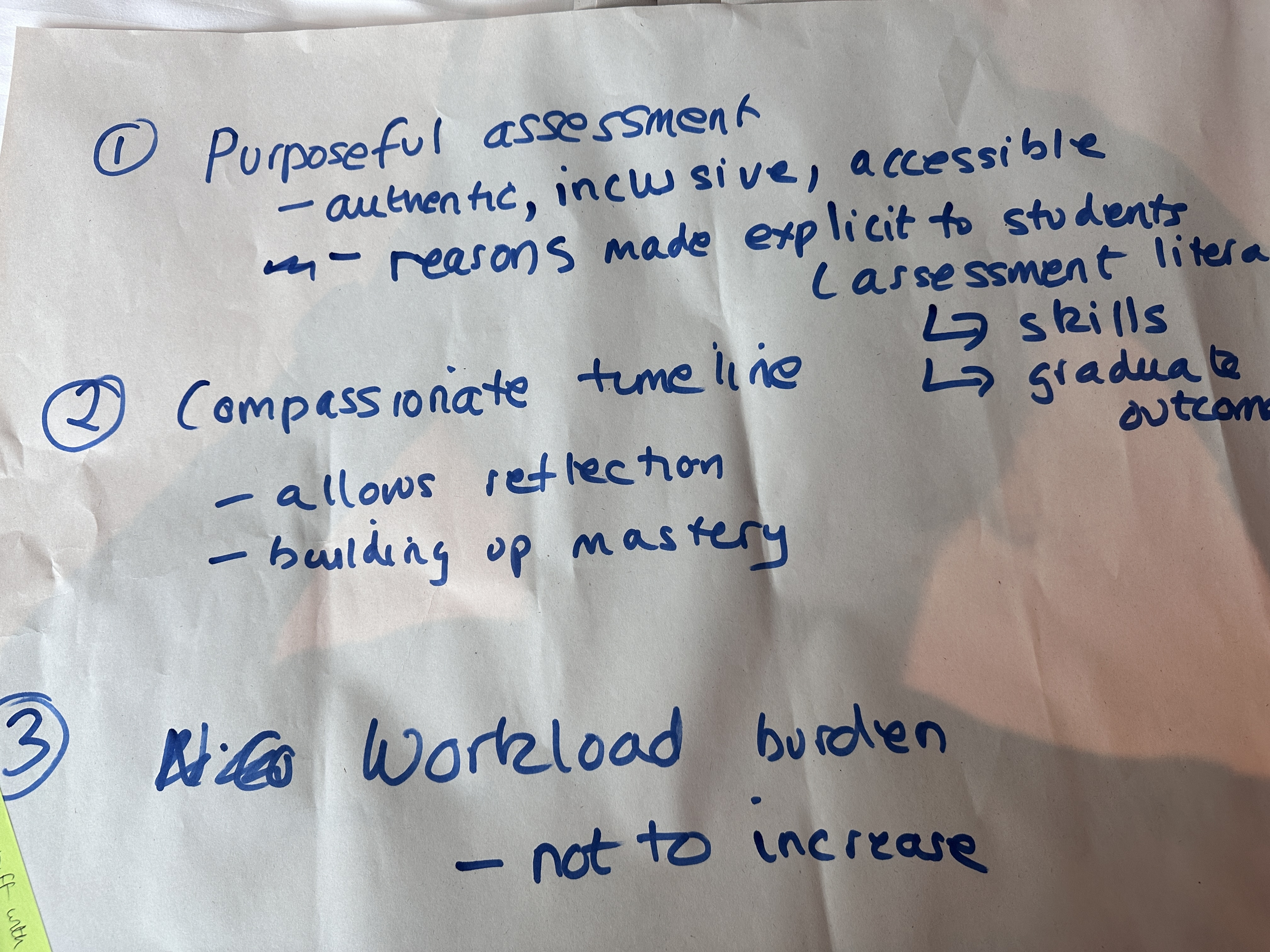
We did have a range of answers recorded on the flip charts, including: programme design, co-design, clear purpose, consideration of well-being, purposeful assessment, compassionate, equitable, aligned, valid, reflective of achievement (discriminating), formative, focus on process over product, digitally enabled, GenAI-conscious, and diverse approaches for diverse students (pictures of the materials left in the room are below).
As an observation, based on my own experience, it is important to:
i) set principles that fit with the mission, strategy, and culture of the institution and/or disciplines; and
ii) make choices about which principles are ‘stand-out’—this gives a point of focus for a united approach, something for us to talk about, prioritise, and double down on.
Choosing some principles doesn’t mean disregarding others; it just means being clear about priorities. I said in the session that authentic, manageable, and inclusive were my top three.
How will you implement these principles in course development at scale?
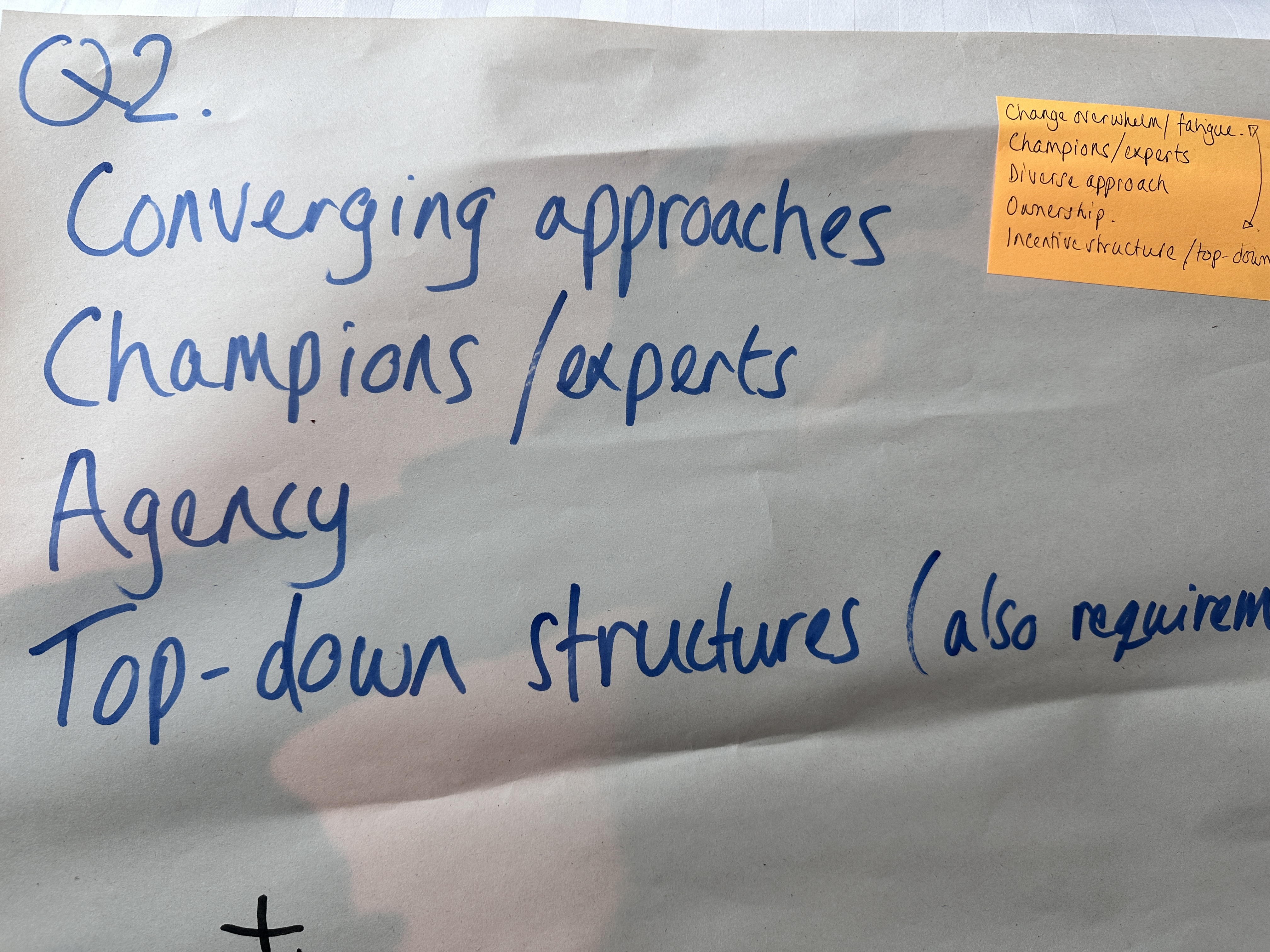
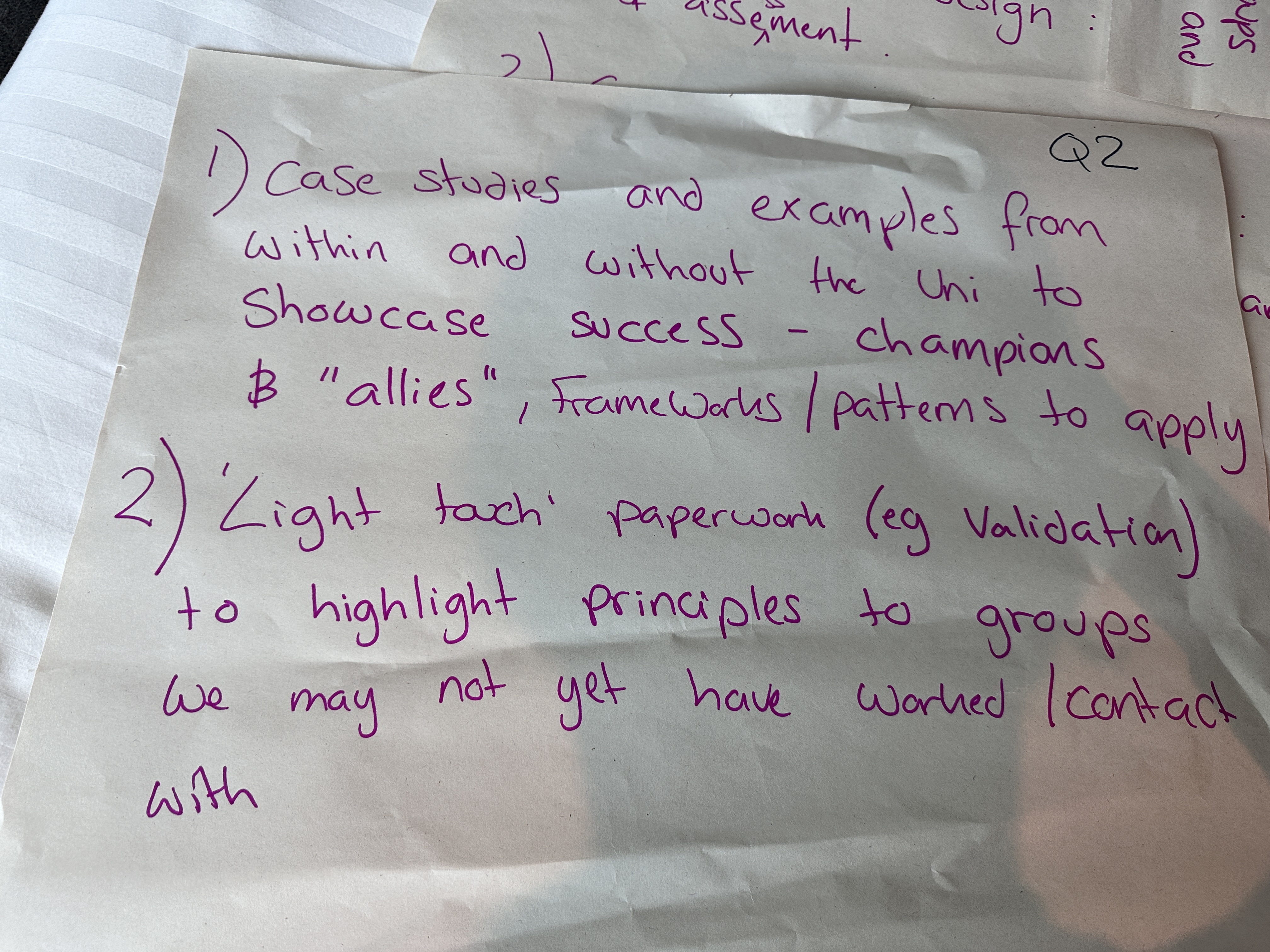
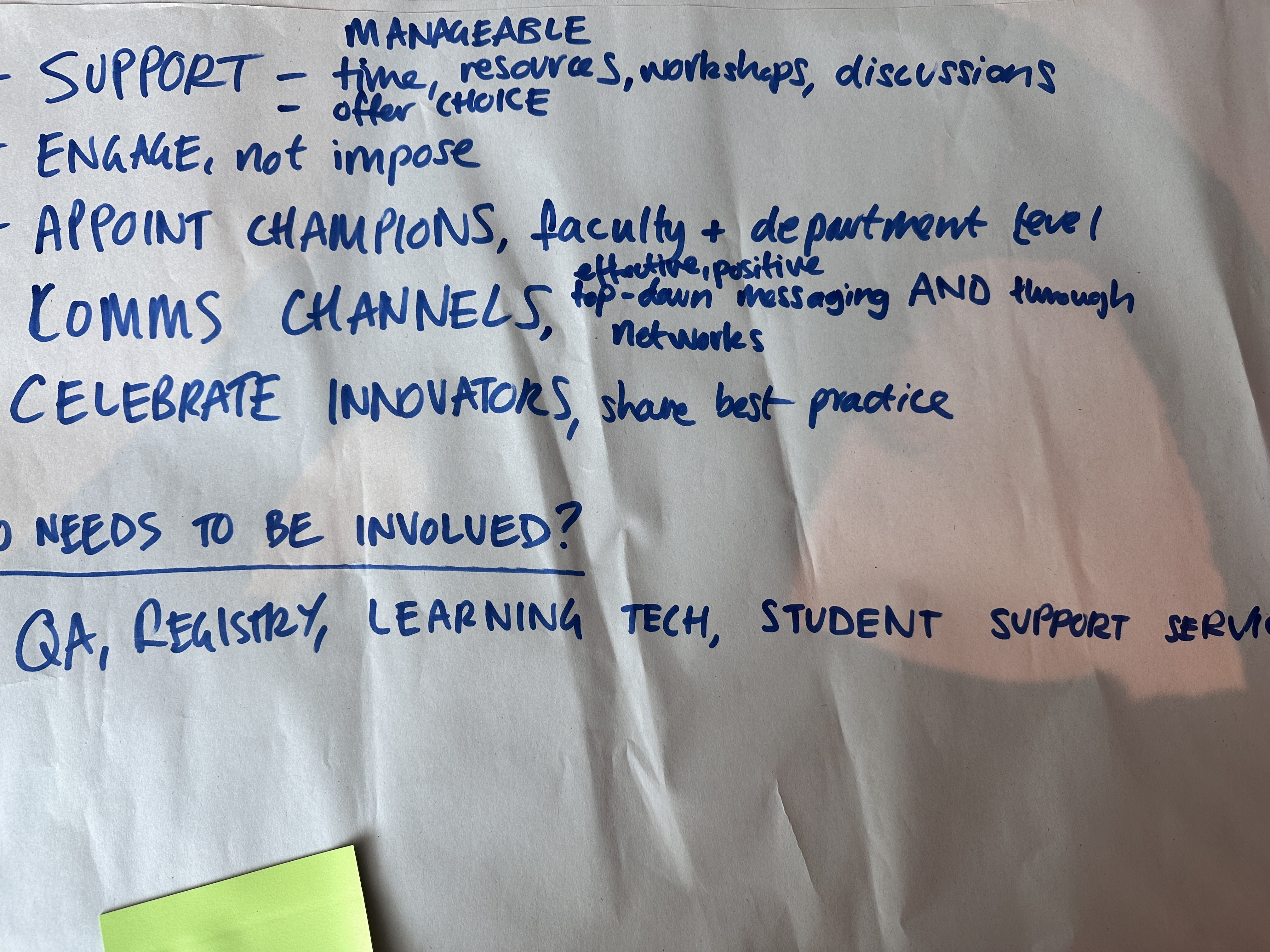
Next, we examined how we would implement change towards the principles we had committed to. We asked what levers and approaches might be used as institutional drivers. Here’s what a room of awesome assessment experts said:
- champions matter (build them and deploy them!)
- use data to justify and advocate for change (from employers, students, alumni, and other sources)
- ensure leadership buy-in at all levels of the organisation
- clear communication about what is needed
- co-creation strategies to find the way forward
- resources (time) to develop assessment and curriculum—this is essential, not optional
- recognition of this work (through promotion, reward, and recognition)
- incentives
- professional development
- agency within frameworks
- converging multimodal approaches to communicate and support change
- providing communications channels for different aspects of change
- providing case studies and exemplars
- approachable support (e.g. QA teams or local, course-based champions)
- coaching
- documentation that is light and functional
- respect for different disciplinary contexts
- support beyond the paperwork (documentation alone won’t affect change)
It’s a long list, and there could have been more if we’d had more time! A point of difference in the feedback was the extent to which change should be top-down—some sought clear direction from above, others less so. Perhaps this is contextual, but it is helpful to consider what is right for each institution.
In the slide deck, I shared a few additional strategies—for example, regarding timetabling team-time for curriculum and assessment change work (though this requires a long lead time); removal of friction (e.g. reducing committee time and moving to events with feedback to agree assessment changes); and working with trailblazers who can try out early implementation steps and refine them for others (recognising that trailblazers may have a different outlook).
Thirdly, we asked: ‘Who needs to be involved in supporting assessment transformation to make sure that the change works in practice?’ And how do you involve them?
This was a hugely valuable step (well, I thought so!). In the room, we identified how broad the reach of assessment change is and how there is a need to engage so many people and teams —learning technologists, quality experts, senior leaders, library colleagues, accessibility specialists, academic integrity experts, students, student reps or unions, estates teams, professional bodies, external examiners, careers and employability leads, comms and marketing colleagues, inclusion teams, sustainability leaders, employers, alumni… well, everyone!
We also shared the importance of timing discussions and consultations to avoid overwhelming people or causing them to zone out because the issue doesn’t seem relevant to them at that time. Timing matters, but so does intention. Sometimes we don’t get the timing right, but sometimes that is about capacity as leaders—not an act of shutting people out. Of course, we must do better here.
We highlighted the important reasons for involving others—firstly, simply, it takes a whole community to make assessment happen (mark entry, boards, technology implementation, external examiner involvement, and so much more). We need a systems wide approach to land change. Second, because the wider community often picks up problems from poor assessment design. Each person working in or on assessment has a unique vantage point which can be a rich source of wisdom, whether it’s administrators chatting with students or specialist learner support teams who have to assist when assessments are overly complex or poorly designed. The expertise in the community should be leveraged at the design stage to help anticipate and avoid potential missteps.
I also shared how, as a leader of a change process, I had been really honest about my own failings at times to engage with some groups. We concluded by talking about vulnerability in leading change in a contested space.
We finished by making personal pledges for moving forward – these were great! Examples include lobbying for time for assessment change work; working with champions to effect change; and mapping out all the stakeholders that we need to work with to bring about change.
And that was our workshop 🙂
Here are the slides and below are the photographs of the groups work.
Thanks to all who made it a great session!











 Lydia Arnold
Leave a comment